- Plot No. 62/14, Phase – 1, G.I.D.C, Vatva, Ahmedabad (Gujarat)

3-Die vs 6-Die vs 9-Die Panipuri Machine — Which to Buy?
Which Panipuri Machine Fits Your Food Business?
A 3-die panipuri machine produces 2,400 panipuris per hour and fits single street-food vendors at INR 85,000–1.25 lakh. A 6-die machine makes 4,800–5,200 per hour for cloud kitchens at INR 1.85–2.2 lakh. A 9-die machine produces 7,200 per hour for FMCG factories at INR 2.75–3.5 lakh. Match the die count to your daily plate volume.
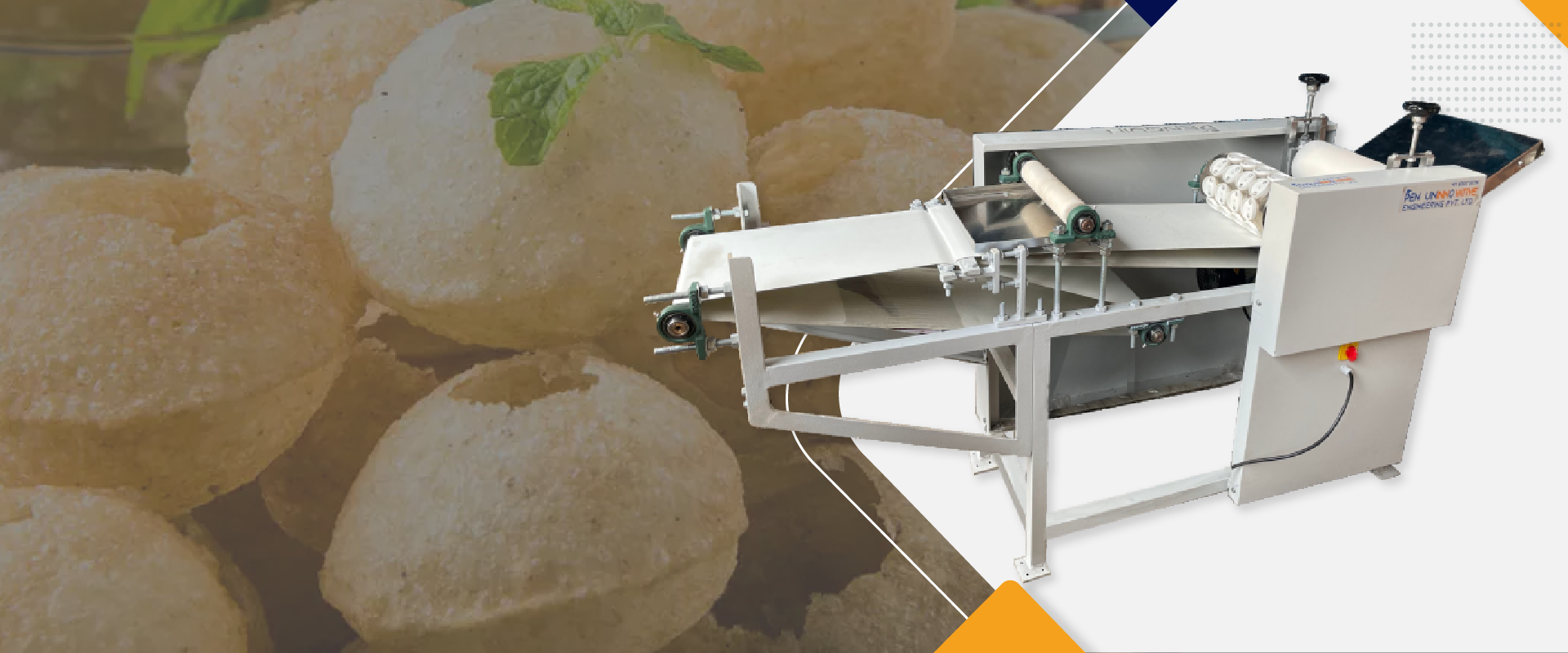
Picking between 3-die, 4-die, 6-die and 9-die panipuri machines comes down to four numbers: pcs/hour you need, floor space, electrical supply, and payback period. This 5-minute guide lays out the real trade-offs, based on 33 years of installing Penguin Engineering machines across Indian street-food vendors, cloud kitchens and FMCG factories.
Spec Comparison Table
| Spec | 3-Die | 4-Die | 6-Die | 9-Die |
|---|---|---|---|---|
| Output / hour | 2,400 pcs | 3,200 pcs | 4,800 – 5,200 pcs | 7,200 pcs |
| Price band (INR) | 85 K – 1.25 L | 1.25 – 1.5 L | 1.85 – 2.2 L | 2.75 – 3.5 L |
| Power draw | ~1.5 kW | ~1.8 kW | ~2.5 kW | ~3.0 kW |
| Electrical | Single-phase 230 V | 230 V (or 3-phase on request) | ||
| Footprint | 4 × 2 ft | 4.5 × 2 ft | 5 × 2.5 ft | 8 × 3 ft |
| Best fit | Street vendor, startup | Busy food cart | Cloud kitchen, franchise | FMCG factory, national chain |
| Typical outlets served | 1 outlet | 1–3 outlets | 25–40 outlets | 60+ outlets |
| Payback period (typical) | 3–5 months | 4–6 months | 6–9 months | 9–14 months |
| Product link | View 3-Die | View 4-Die | View 6-Die | View 9-Die |
Prices are indicative ex-Ahmedabad factory, GST extra. Confirmed quotes available on request.
How to Decide in 3 Questions
Question 1 — How many plates do you serve per day?
- Under 300 plates/day → 3-die (or 4-die if you forecast 50%+ growth)
- 300 – 600 plates/day → 4-die
- 600 – 2,000 plates/day (cloud kitchen supplying multiple outlets) → 6-die
- 2,000+ plates/day (FMCG / franchise chain / export) → 9-die
Question 2 — Single-phase or three-phase?
If your outlet has only single-phase 230 V (true for 95% of urban Indian street-food outlets), 3/4/6-die will all run. 9-die runs on single-phase too but three-phase is recommended for continuous-shift operations and required for export variants.
Question 3 — What's your payback tolerance?
Penguin's rule of thumb: divide machine cost by ~30× your realistic daily net margin-per-plate (typical ₹8–15/plate for street panipuri, ₹20–35 for restaurant-branded panipuri). A 6-die machine at ₹1.85 L recovers in ~200 operating days at cloud-kitchen volumes.
4 Common Mistakes Buyers Make
- Buying too small "to start cheap" — buyers often outgrow a 3-die within 8 months. If growth is already in the plan, step up one tier.
- Ignoring the belt/extension option — a 4-die machine with extended belt gives better-quality output than a bare 6-die. Ask about the belt spec in your quote.
- Skipping the filling + fryer combo — a panipuri machine alone makes puris; you still need filling (nozzle) and frying machines to ship plates. Factor these in from day 1.
- Overlooking AMC in year 2+ — Penguin's 12-month warranty is free; a 24-month AMC extension is ~₹8-12K and covers belt/motor wear-and-tear on continuous shift operations.
Still Unsure? Talk to Penguin Engineering
Share your daily plate volume, outlet footprint, and electrical supply with our team. We'll recommend the right die configuration + belt option and send a formal GST-inclusive quote in under 24 hours.