Key Takeaways
- Boosts Productivity: Modern tea machines automate the brewing process, allowing businesses to serve 80–200 cups per hour, reducing labor dependency and improving service speed.
- Consistent Taste and Quality: Automated brewing ensures precise temperature, ingredient ratios, and timing, delivering uniform flavor in every cup, building customer trust and satisfaction.
- Hygiene and Food Safety: Closed brewing systems, sealed ingredients, and easy-clean designs minimize contamination risks, making tea machines ideal for hospitals, offices, and high-traffic areas.
- Cost and Energy Efficiency: Controlled ingredient dispensing reduces wastage, and automated heating cycles optimize energy use, lowering operational costs over time.
- Scalable and Versatile: Tea machines adapt to growing demand and diverse commercial environments, from offices and factories to hospitals and railway stations, supporting consistent output without service disruption.
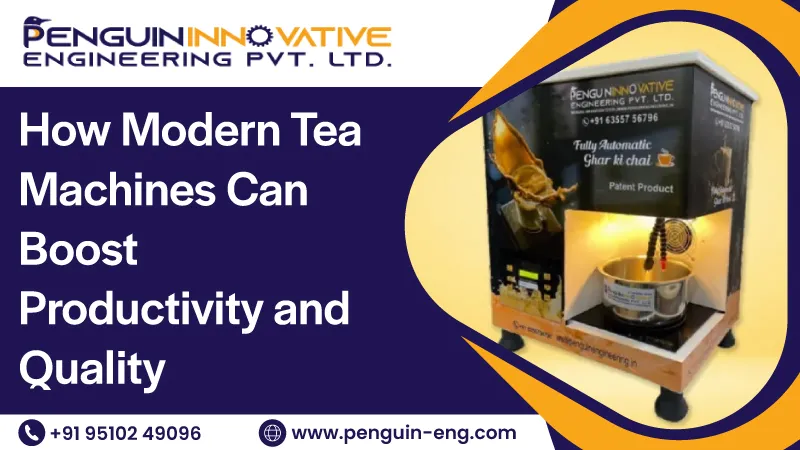
Tea ranks among the most widely consumed drinks in India. Offices, factories, hospitals, railway stations, and commercial kitchens serve hundreds or even thousands of cups daily. Manual tea preparation struggles to match this demand. It creates inconsistency, hygiene risks, and high labor dependency. Modern tea machines solve these problems with automation, precision, and speed. Modern tea machines are designed for volume, consistency, and hygiene. They automate the full brewing process, from water heating to mixing ingredients and dispensing. This reduces manual effort and improves output control. Businesses that serve tea as a core offering gain faster service, uniform taste, and better cost control. These advantages make tea machines a smart investment across industries.
Growing Demand for Automated Tea Solutions
India’s tea consumption crosses 1 billion kilograms annually. Commercial tea service forms a large part of this demand. Cafeterias, corporate offices, canteens, and public spaces require quick turnaround without compromising taste. Manual methods fail during peak hours. Delays reduce customer satisfaction and increase staff pressure.
Automated systems meet this demand with controlled brewing cycles. A Tea Making Machine in India addresses local taste preferences while handling high-volume requirements. These machines follow preset parameters for temperature, brewing time, and ingredient ratios. The result is a consistent cup every time, even during rush hours.
What Is a Modern Tea Machine
A modern tea machine is an automated unit designed to prepare tea with minimal human intervention. It uses programmed settings to heat water, mix tea extract, milk, sugar, and other ingredients, then dispense the beverage. Most machines support multiple variants such as strong tea, light tea, or flavored options. Commercial-grade machines focus on durability and hygiene. Stainless steel bodies, food-grade piping, and sealed brewing chambers reduce contamination risks. For businesses, this translates into reliable daily operation and compliance with hygiene standards.
Productivity Benefits of Modern Tea Machines
Productivity improves when repetitive tasks become automated. Tea preparation involves several steps that consume time and labor. A modern machine completes these steps within seconds. One machine can prepare 80 to 200 cups per hour, depending on the model. This output equals the work of multiple staff members. During peak hours, service speed remains stable. Staff can focus on customer handling and other tasks. Using a Tea Making Machine in India also reduces training time. Operators only need basic instructions. This lowers dependency on skilled labor and reduces errors caused by staff turnover.
Consistent Taste and Quality Control
Taste consistency is a major challenge in manual tea preparation. Variations in water temperature, boiling time, and ingredient quantity change the flavor. Customers notice these differences. Modern tea machines use fixed recipes. Every cup follows the same brewing logic. Temperature sensors and timers control extraction levels. Consistent delivery increases customer confidence and reinforces a strong brand identity. For businesses serving tea daily, quality consistency reduces complaints and repeat errors. A standardized Tea Making Machine in India supports long-term service reliability without frequent adjustments.
Hygiene and Food Safety Advantages
Hygiene plays a critical role in beverage service. Manual handling increases exposure to dust, hands, and open containers. Automated tea machines operate in closed systems. Ingredients remain sealed until use. Most modern machines include easy-clean designs. Detachable parts and internal flushing systems simplify maintenance. This reduces bacterial growth and cross-contamination risks. For hospitals, offices, and food courts, hygiene compliance is non-negotiable. A commercial
Cost Efficiency and Operational Savings
Initial investment in a tea machine may seem high. Long-term savings make the decision practical. Reduced labor costs form the biggest advantage. One machine replaces multiple manual roles. Ingredient usage becomes more efficient. Automated dispensing controls quantities precisely. This reduces wastage of tea leaves, milk, and sugar. Over time, these savings offset the machine cost. Electric consumption remains optimized due to controlled heating cycles. Compared to continuous gas boiling, machines operate only when required. This improves energy management in commercial setups.
Scalability for Growing Businesses
As businesses grow, beverage demand increases. Manual systems struggle to scale without adding staff and space. Tea machines scale easily. Businesses can upgrade capacity or add units without changing workflows. Canteens and cafeterias benefit from predictable output planning. A Tea Making Machine in India supports expansion without disrupting service quality. This scalability suits startups and large enterprises alike.
Applications Across Industries
Modern tea machines serve multiple sectors. Corporate offices use them for employee refreshment. Factories rely on them for shift-based tea breaks. Hospitals require hygiene and fast dispensing. Railway stations and airports need high-capacity service.
Maintenance and Reliability Factors
Commercial machines are built for continuous use. High-quality components reduce breakdown frequency. Regular cleaning and basic servicing keep performance stable. Modern machines provide alert systems for low ingredients or maintenance needs. This prevents downtime during peak service. Businesses benefit from predictable operation and minimal disruptions.
Environmental Considerations
Automated tea machines reduce waste through controlled dispensing. Precise ingredient usage lowers leftovers. Energy-efficient heating systems reduce power consumption. Compared to traditional boiling methods, modern machines support sustainable operations. For businesses focused on efficiency, this environmental benefit adds value.
Why Choose Us
Penguin Engineering focuses on designing reliable and practical food and beverage machines for Indian conditions. The company understands commercial service challenges and builds machines that match real usage needs. Penguin Engineering emphasizes durability, hygiene, and ease of operation. Their tea machines support consistent output and simple maintenance. With industry experience and customer-focused design, Penguin Engineering delivers solutions that improve daily operations. Businesses choose Penguin Engineering for dependable machines that support productivity and quality without unnecessary complexity.
Conclusion
Modern tea machines have transformed commercial tea service. They improve speed, consistency, hygiene, and cost control. Automation reduces labor dependency and supports high-volume demand. Businesses gain predictable output and stable quality. A Tea Making Machine in India fits diverse sectors and usage patterns. With scalable capacity and controlled brewing, these machines meet modern service expectations. Investing in the right tea machine strengthens operations and customer experience. Companies seeking reliable beverage solutions benefit from advanced automation and proven engineering.
Learn how modern tea machines are for expert guidance. Call +91 9510249096 or email info.penguinmech@gmail.com